Independent systems lab · Zurich + Buenos Aires

High Performance
AI Lab.

We're an independent lab for local AI. Intelligence you rely on should run on hardware you own, stay open to inspection, and be measured honestly. We build the pieces that make that possible — an inference engine, a state format that moves its work exactly, and, next, the machinery that proves an AI system did what it claims.

decode vs pinned llama.cpp
1.05×
llama.cpp ÷ muser · 2,048 tok · 5-rep mean
faster first token, GB10 prefill
3.75–4.26×
5 counted reps per depth · deterministic output
warm local prefix resume
~65 ms
one Mac · exact-prefix hit
deep-handoff soak, no losses
8/8
130,815 tok per handoff · back to back
01 / FROM THE LAB

From the lab.

What Survives the Next Model

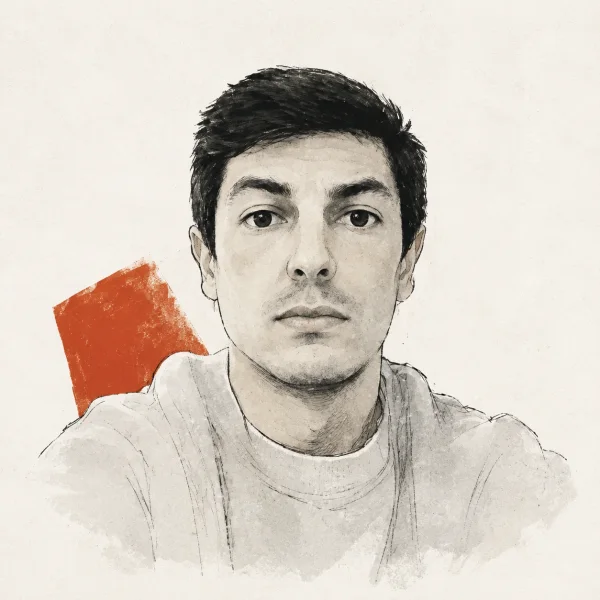
Sergio Soage18 min read

The request has timed out. An agent is refunding forty euros to a customer. It sent the instruction to the payment provider and received no answer. Now it must choose: send the instruction again, or stop.

One observation. Several worlds. Opposite right answers. A useful eval should expose the conditions its theory of success leaves out—and leave those discoveries useful to the next investigator.

Read more

02 / SCOPE

A model is only one part of the system.

We work from the job that needs doing to the hardware that does it: the engine, the state it keeps, the kernels underneath, and the evidence that says whether any of it worked. Say what you measured. Name the machine. Show the receipt.

Measured, or it doesn't ship.

03 / SYSTEMS · OPEN SOURCE

The systems we've
released so far.

Four open repositories: the engine, the cache format it replays, the dashboard that watches it, and the book that explains how it all works.

  1. 01

    muser

    We built Muser to show what local inference can be: Muse Glimmer, a 52-layer ~30B model, running well on one Mac — with the option of handing long prompts to a GPU node for prefill. On our exact-token benchmarks it matches or beats a source-pinned llama.cpp at every depth we tested, with or without speculation.

    On natural text, speculation helps on some content and not on others — the benchmarks publish both sides.

    ENGINE · RUST + METAL
  2. 02

    kvpack

    We built kvpack because a computed KV cache is work worth keeping. It saves inference state and restores exactly the same bytes — after a restart, a crash, or on another machine — and it refuses state that doesn't match the model, tokenizer, and configuration it came from. The refusal is the point: a wrong restore should never be silent.

    Cross-engine reuse works when two adapters deliberately share a representation — kvpack doesn't invent one.

    STATE · RUST
  3. 03

    muser-console

    The dashboard we wanted while running Muser: fleet health, cache savings, and live sessions, with one rule everywhere — missing data stays visibly missing. No zero-filling, no demo numbers, no gaps quietly connected on a chart.

    One Rust binary and one checked-in HTML page — no CDN, no package tree, no frontend build.

    TELEMETRY · RUST
  4. 04

    How to Write an Inference Engine

    Everything we learned building these systems, written down: how one token is generated on Apple Silicon, how the speculative lanes work, how kvpack replays state exactly, and how a GPU node hands prefill to a Mac. Forty chapters, with every measured number cited to a receipt.

    Read it online ↗ · source ↗

    BOOK · 40 CHAPTERS
03 / SYSTEMS · DISAGGREGATED

Prefill on a GB10.
Decode on a Mac.

vLLM prefills long context in NVFP4 on a GB10 node; Muser decodes on Apple Metal. At 130,815 tokens that is 137.4 s to first token instead of 570.1 s — 4.15×, five counted reps, deterministic output in every one.

01 / LONG-PROMPT PREFILLCUDA

Prefill on NVIDIA.

vLLM processes long context in NVFP4 on a DGX Spark or another GB10-class machine.

  • DGX Spark / GB10
  • vLLM
  • NVFP4 prefill
02 / VERIFIED STATE HANDOFF

kvpack · TLS + HMAC
mismatch → reject

03 / TOKEN-BY-TOKEN DECODEMETAL

Decode with Muser.

The Mac verifies identity and integrity, installs the KV state, then Muser continues generation with Metal.

  • Apple Silicon
  • Muser
  • Metal decode
~65 mswarm local prefix, one Mac
0.61 s / 1.06 swarm 65k / 131k prefix with a producer — vs 68.6 s / 147.8 s cold, bit-identical output
54.2851%of the bytes moved for a half-cached prompt, output SHA-256 equal to a full handoff's
~12.9 sa miss through the same path stays slow — measured reuse, not cache-forever

One request, two architectures. The Mac checks identity and integrity before installing anything; a mismatch is rejected, and the rejection keeps its receipt. The demonstrated topology is one GB10-class producer and one Mac consumer — scale-out is what we're working on next. We also tried speculative decoding across the wire: it didn't pay for itself, so we published the negative result and moved on.

03 / FOUNDERS

Behind the lab.

One of us lives in Zurich, the other in Buenos Aires; Patagonia is the shared love. The lab is the two of us, building these systems end to end.

Co-founder · Independent systems researcher

Alvaro Videla

Systems researcher and author working across local AI, distributed systems, and developer education. A former RabbitMQ core developer who has also worked at Apple, he co-authored RabbitMQ in Action and now builds reproducible inference systems for Apple Silicon.

Zurich, Switzerland

Co-founder · AI researcher

Sergio Soage

AI researcher working across language models, deep learning, and reinforcement learning. His public work spans NLP and sequence tagging, PyTorch experiments, question-answering systems, generative AI, and deep-research agents, connecting research ideas to practical code.

Buenos Aires, Argentina
05 / WHAT FOLLOWS

What we're working on.

The next pieces of work, and where each one stands today.

  1. 01

    Multi-producer scheduling

    today's qualified topology is one Mac and one GB10 node

  2. 02

    Node de-enrollment

    nodes can join in one command; leaving cleanly is next

  3. 03

    Remote multimodal prefill

    unqualified — requests with images fall back to local prefill

  4. 04

    The evaluation half

    how we decide whether an agent system worked — in private development

OPEN SOURCE

Run it. Check the numbers.

All of it is open — clone the repos, run the benchmarks, and see for yourself.